The Complete Powder Skiing Manual: From Fat Skis to Floatation
Updated: January 2026 | Technical Field Guide | By Lead Alpine Gear Desk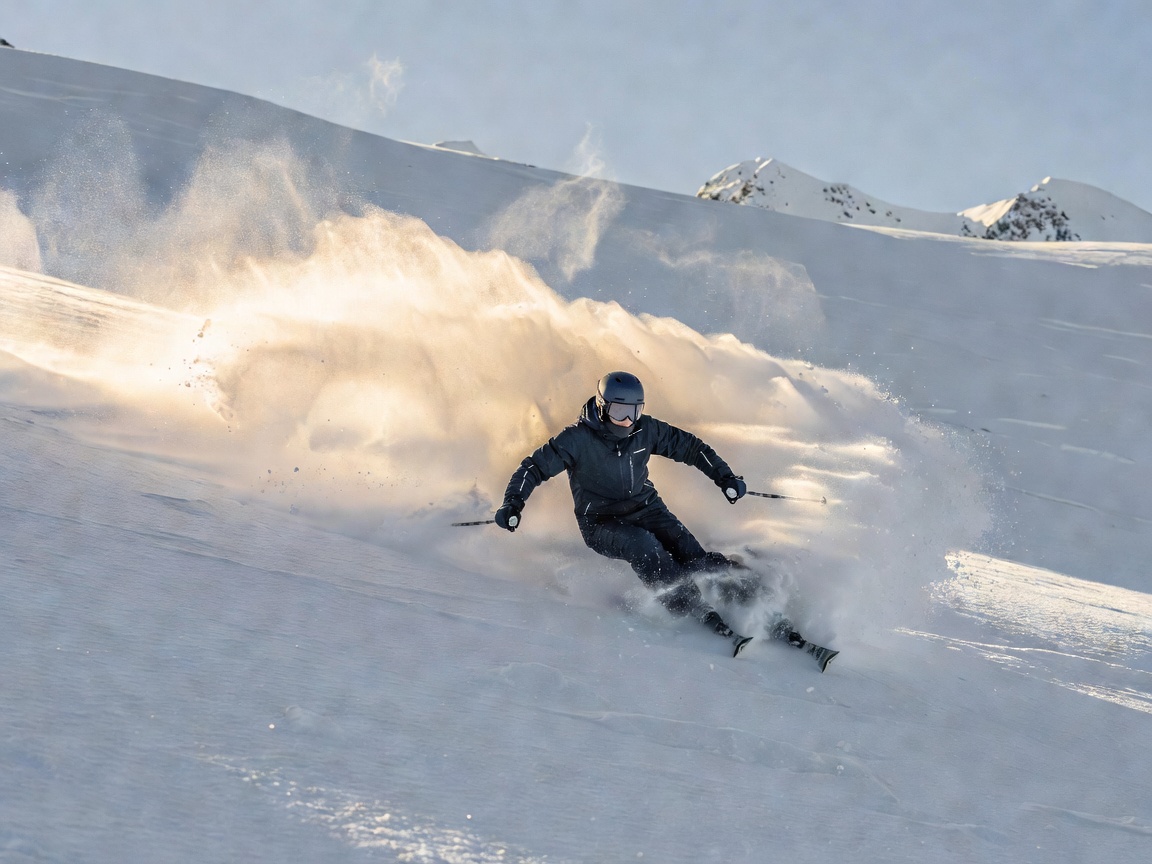
Skiing through unbroken, waist-deep powder snow is widely considered the ultimate high in winter sports. Yet, for skiers who have only ever carved on hard-packed, machine-groomed pistes, their first venture into deep powder often ends with caught tips, burning quadriceps, and frustrating face-plants. Skiing 3D snow requires completely different mechanics, equipment dimensions, and muscle engagement.
1. The Physics of Powder: Surface Area and Rocker Profile
Piste carving skis feature narrow waists (68mm to 80mm underfoot) with severe sidecuts and traditional positive camber designed to dig into hard ice. In powder, these narrow planks immediately sink like anchors.
To stay on top of deep snow, you need fat powder skis with waist widths between 105mm and 118mm (or even 120mm+ for Hokkaido Japow). Key design features include:
- Tip and Tail Rocker: The ends of the ski bend upwards early, creating a boat-hull effect that naturally rises to the surface without requiring you to lean backward.
- Tapered Tips: Prevent snow drag and hooking when transitioning between turns in variable or heavy snowpack.
- Medium Flex Pattern: Allows the ski to flex into an arc inside the snow, providing energetic rebound at the end of every compression.
2. Stance and Body Position: Stop Leaning Back!
The most common mistake amateur powder skiers make is leaning all their weight back onto their heels to keep their tips up. This causes extreme thigh fatigue within 60 seconds, reduces steering authority to zero, and causes the tails to dig too deep.
With modern rockered powder skis, you must maintain a centered, athletic stance:
- Keep your shins in light contact with the fronts of your ski boots.
- Keep your hands forward and visible in your peripheral vision; never drop your uphill hand.
- Keep your feet slightly closer together than you would on groomed runs, treating both skis as a single unified planning surface (the "monoplank" concept).
3. The Rhythm of the Turn: Bounce, Retract, and Steer
In groomed skiing, turns are initiated by tipping the skis onto their sharp metal edges. In powder, edges have minimal purchase—you are skiing through density, not on a hard plane. You steer by weighting and unweighting in a rhythmic, undulating dolphin-like bounce.
As you sink into the trough of your turn, the snow compresses and pushes back against your skis. Use this rebound energy to pop upward, lighten the pressure on your feet, pivot both skis simultaneously down the fall line, and sink into the next turn.
4. Safety in the Powder: Tree Wells & Transceivers
Deep powder carries serious hazards that do not exist on groomed runs. Always ride with a partner and maintain visual contact, especially in tree glades where hidden tree wells (hollow voids of loose snow around evergreen trunks) can cause dangerous suffocation if fallen into headfirst. Never enter unpatrolled sidecountry without an avalanche beacon, shovel, and probe.